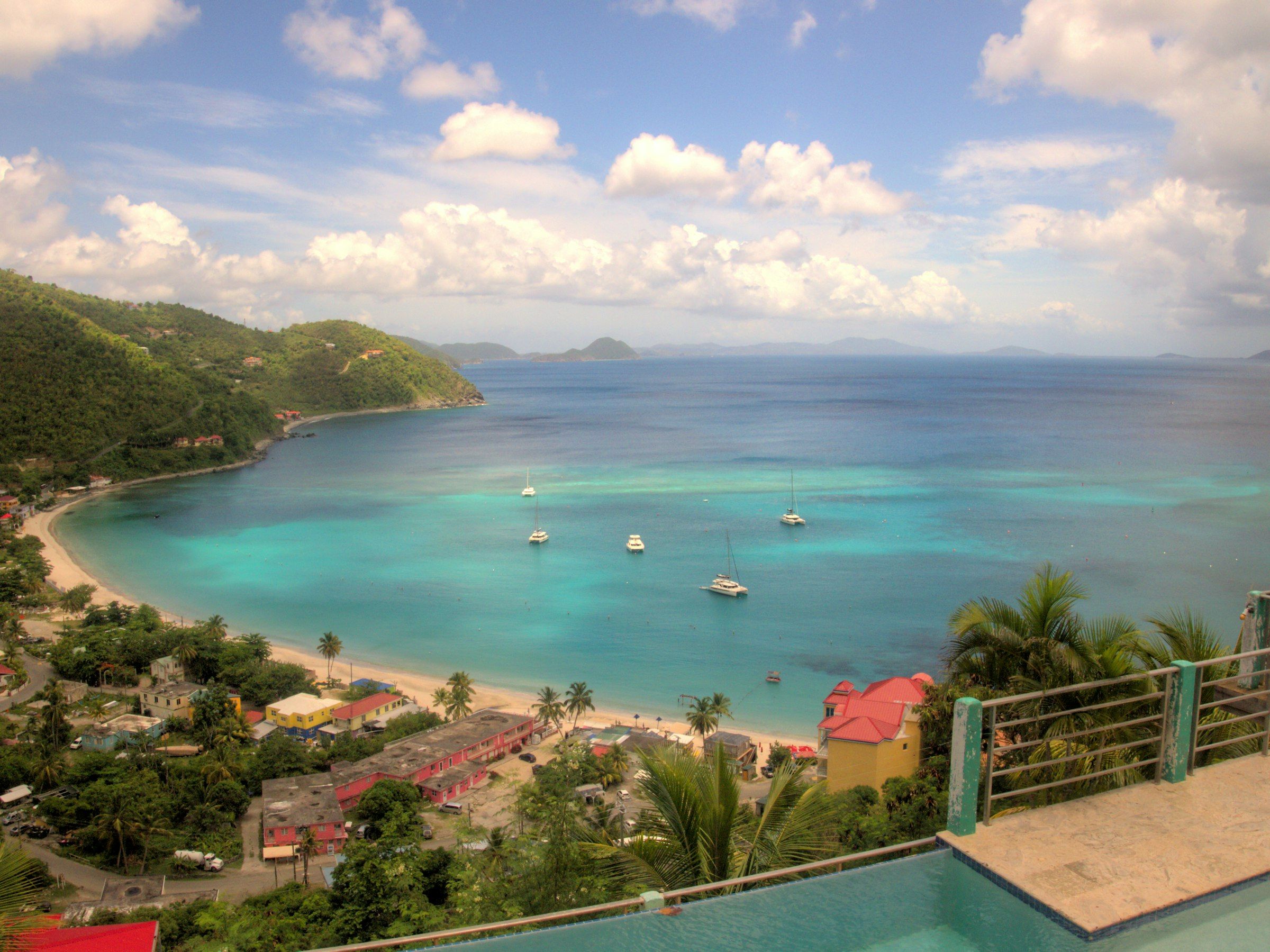
There’s a reason the British Virgin Islands are often called the sailing capital of the Caribbean. Some sixty islands, cays and rocks sit within a day’s easy sail of each other, protected by a ring of land that keeps the sea calm while the trade winds keep the sails full. You can be at anchor off a different beach every night and never sail for more than a couple of hours to get there.
This guide covers the islands most charters visit, a sample week, and the practical things worth knowing before you go.
Why the BVI work so well by yacht
Short hops, steady wind. The Sir Francis Drake Channel runs through the middle of the islands like a sheltered lake. The easterly trade winds blow at around 15 to 20 knots for much of the year, so sailing is lively without being hard work, and most passages take between one and three hours.
Line-of-sight sailing. Almost every passage is from one visible island to another. That makes the BVI a favourite for first-time bareboat skippers, and a relaxed place for crewed charters, where your captain can change plans around the weather or your mood without losing a day.
Something for everyone aboard. Within a week you can snorkel a wreck, swim through sea caves, walk among giant granite boulders, eat lobster on a flat coral island and dance barefoot on the sand at a beach bar that’s been pouring the same famous cocktail for fifty years.
The islands
Tortola
The largest island and the starting point for most charters. The main charter bases are at Road Town and Nanny Cay on the south coast, and the island’s steep green hills make a dramatic backdrop to the channel. On the north shore, Cane Garden Bay is one of the prettiest bays in the islands: a long curve of sand, palms and a handful of beach bars, best enjoyed on a calm day when the northern swell is down.
Norman Island
Said to have inspired Robert Louis Stevenson’s Treasure Island, Norman Island is usually the first night out from Tortola. The Bight is a large, sheltered anchorage with a floating bar and restaurant. Around the point, The Caves are some of the best snorkelling in the islands: swim into the shaded mouths of the caves and you’re surrounded by shoals of fish. Nearby, The Indians, a cluster of rock pinnacles, are covered in coral and best visited early, before the day boats arrive.
Salt Island and Cooper Island
Off Salt Island lies the wreck of the RMS Rhone, a Royal Mail steamer lost in a hurricane in 1867. Parts of her lie in shallow enough water to snorkel, and the deeper sections are a classic dive. Next door, Cooper Island has a small, laid-back beach club, a rum bar and one of the most relaxed anchorages in the channel.
Virgin Gorda
Virgin Gorda’s southern tip is home to The Baths, where giant granite boulders tumble into the sea and form grottoes, pools and tunnels you can wade and climb through. The national park moorings fill early, so it’s a morning visit. At the island’s northern end, North Sound is a large, protected bay ringed by reefs, a natural base for watersports, with Saba Rock and the rebuilt Bitter End for sundowners.
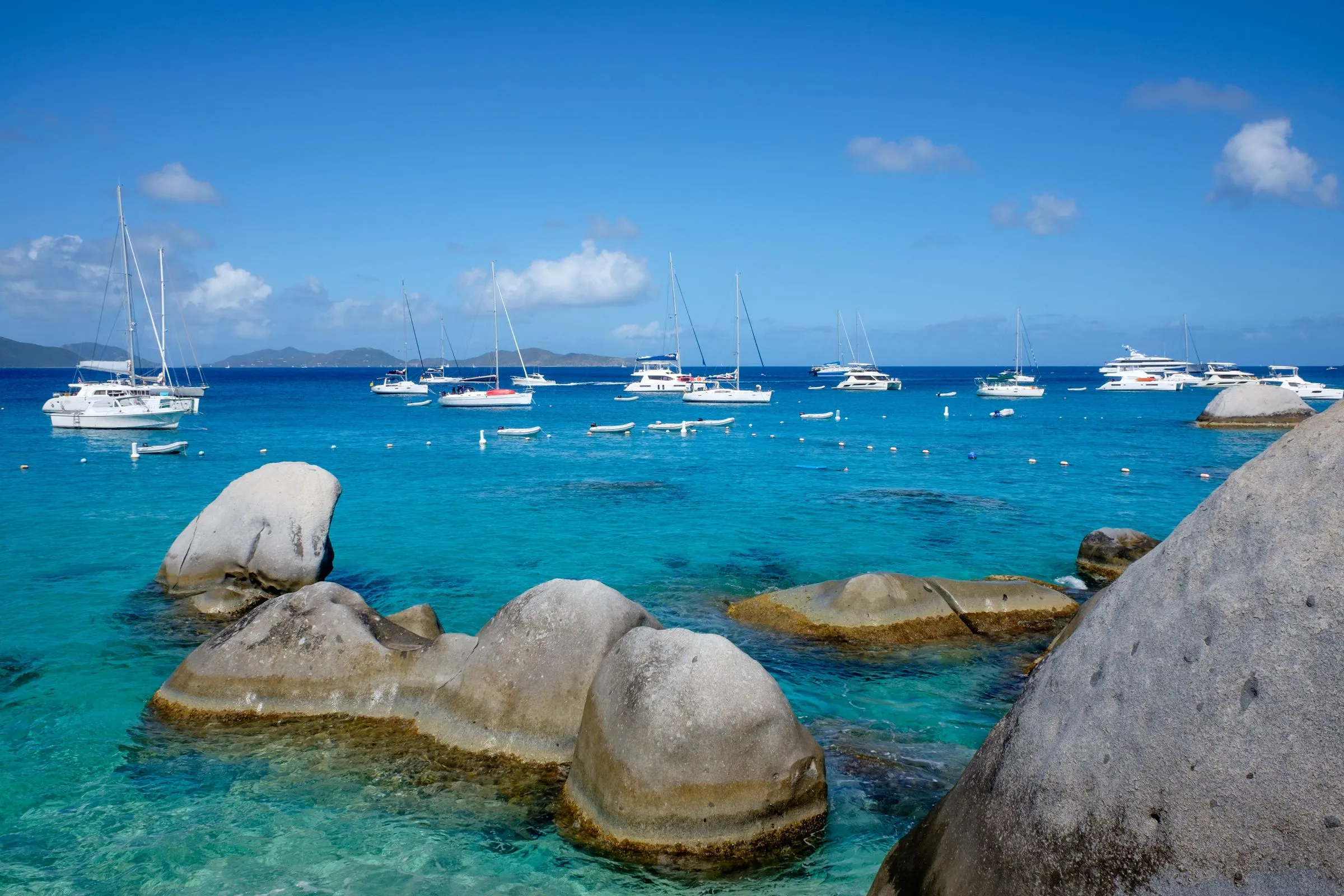 Devil’s Bay, next to The Baths. Photo: iwashere on Pexels.
Anegada
Unlike the other islands, Anegada is flat: a coral island fringed by Horseshoe Reef, one of the largest barrier reefs in the Caribbean. The approach needs care and good light, which is why some bareboat companies restrict it, but the reward is miles of near-empty beaches at Loblolly Bay and Cow Wreck, flamingos in the salt ponds and lobster grilled on the beach in the evening.
Jost Van Dyke
The smallest of the four main islands, and the most famous for its beach bars. White Bay is where the Painkiller cocktail is said to have been invented: guests traditionally swim ashore, so the bar takes damp banknotes. In Great Harbour, Foxy’s has been hosting sailors since the late 1960s. Just off the east end, Sandy Spit is the picture-postcard islet you’ve probably seen in photographs: a crescent of sand with a few palms and nothing else.
A sample week
Every charter is planned around the guests and the weather, but this is a typical seven nights from Tortola:
- Day 1: Board at Nanny Cay, settle in, and sail to Norman Island for an evening swim in The Bight.
- Day 2: Snorkel The Caves and The Indians before breakfast is cleared, then sail to Cooper Island.
- Day 3: Snorkel the RMS Rhone, then on to Virgin Gorda; anchor off Spanish Town or continue to North Sound.
- Day 4: Early visit to The Baths, then an afternoon of watersports in North Sound.
- Day 5: A longer sail to Anegada (weather permitting) for beaches, flamingos and a lobster dinner.
- Day 6: Downwind to Jost Van Dyke: Sandy Spit, White Bay and Great Harbour.
- Day 7: Cane Garden Bay or Monkey Point, then back towards Tortola for a final night aboard.
On a crewed charter your captain will shuffle this to avoid the crowds and catch the best conditions. On a bareboat charter, your charter base will brief you on any areas you’re asked to avoid.
When to go
The main season runs from mid-December to April, when the weather is dry, sunny and reliably breezy, and the islands are at their liveliest. Christmas, New Year and Easter book up early, often a year ahead for the most popular crewed yachts.
May and June are quieter and often excellent: calmer seas, warm water and better availability. The Atlantic hurricane season officially runs from 1 June to 30 November, with the greatest risk from August to October; many crewed yachts leave the islands or take a break during those months. We’ve written a month-by-month guide to choosing your week.
Getting there
There are no direct flights from the UK. Most guests fly to Antigua or St Thomas (US Virgin Islands) and connect to Beef Island airport on Tortola, or take the ferry from St Thomas to Road Town or West End. Some crewed yachts can start from St Thomas and clear into the BVI on the first day. We’ll help you choose the easiest route for your dates.
Good to know
- Currency: the US dollar.
- Entry: UK passport holders don’t usually need a visa for a holiday, but always check the latest UK government travel advice before you go.
- Clearing in: yachts must clear customs and immigration on arrival in the BVI. Your crew or charter base will handle the paperwork, but everyone aboard needs their passport.
- Moorings: National Parks Trust moorings protect the reefs at popular sites and need a permit, which is normally arranged with the charter. Anchoring isn’t allowed on coral.
- Reef-safe sunscreen: please bring it. The reefs here are what make the snorkelling so good.
Planning a BVI charter
Whether you’re thinking about a crewed catamaran for a family, a motor yacht to cover more ground, or a bareboat for an experienced crew, tell us about your party and we’ll come back with a shortlist of yachts that are free on your dates. If you’re still deciding between a crewed and bareboat charter, our guide to the difference is a good place to start.
← Back to all destinations