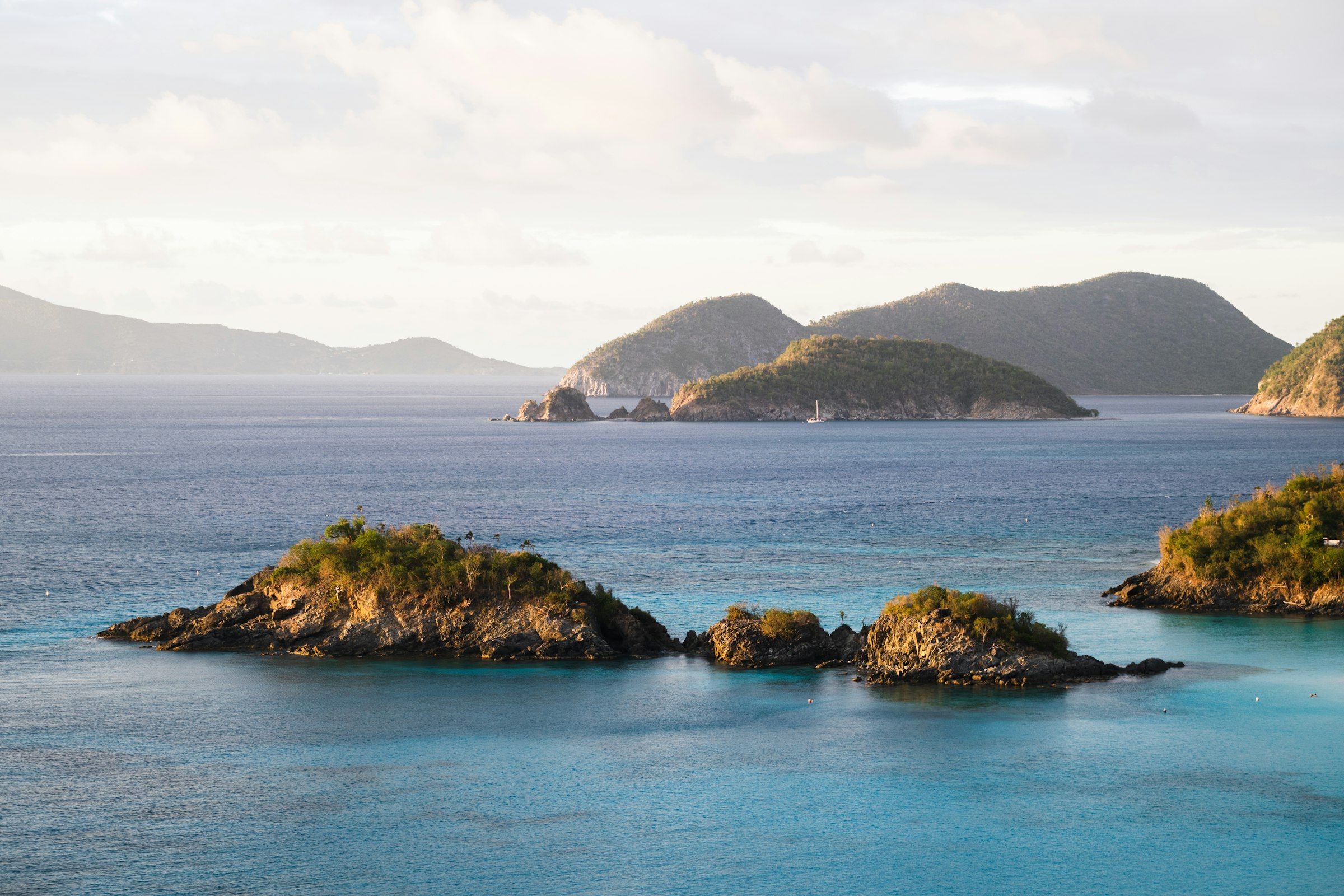
The US Virgin Islands sit just to the west of the British Virgin Islands, close enough that you can see one from the other. They share the same steady trade winds and clear water, but have a character of their own: a little more polished in St Thomas, wilder and greener in St John, and quieter still in St Croix, out on its own to the south.
For many charters the USVI are the starting point: St Thomas has the best air connections in the region, and some of the Caribbean’s finest crewed yachts are based there.
Why charter from the US Virgin Islands
Easy to reach. Cyril E. King Airport on St Thomas has frequent flights from the US mainland, which makes it the simplest gateway for many guests, including those flying from the UK via a US hub.
A national park on the water. Around two thirds of St John is the Virgin Islands National Park, and much of the water around it is protected too. The bays are free of development, the moorings protect the seagrass and coral, and the snorkelling is excellent.
The best of both territories. With the right paperwork, a week can start in St Thomas, cross to the British Virgin Islands and finish back in the USVI. Your crew will handle customs on both sides.
The islands
St Thomas
The busiest of the three and the main charter base. Charlotte Amalie, the capital, has one of the most beautiful natural harbours in the Caribbean, lined with old Danish warehouses, while Red Hook at the east end is where many charters begin. Close by, Christmas Cove on Great St James is a sheltered first-night anchorage with good snorkelling, and Honeymoon Beach on Water Island is an easy, family-friendly stop. On the north coast, Magens Bay is a mile-long arc of sand that regularly appears on lists of the world’s best beaches.
St John
Most charters spend the bulk of their USVI time here. On the north shore, a string of national park bays runs east from Cruz Bay:
- Trunk Bay has an underwater snorkel trail with signs on the seabed, and the little cay offshore that appears on postcards.
- Cinnamon Bay and Maho Bay are calm, shallow and known for green turtles grazing on the seagrass. It’s one of the best places in the islands to swim with them.
- Waterlemon Cay in Leinster Bay is a small island ringed with coral, a short dinghy ride and swim from the mooring field. Walk up to the Annaberg sugar mill ruins for the view across to Tortola.
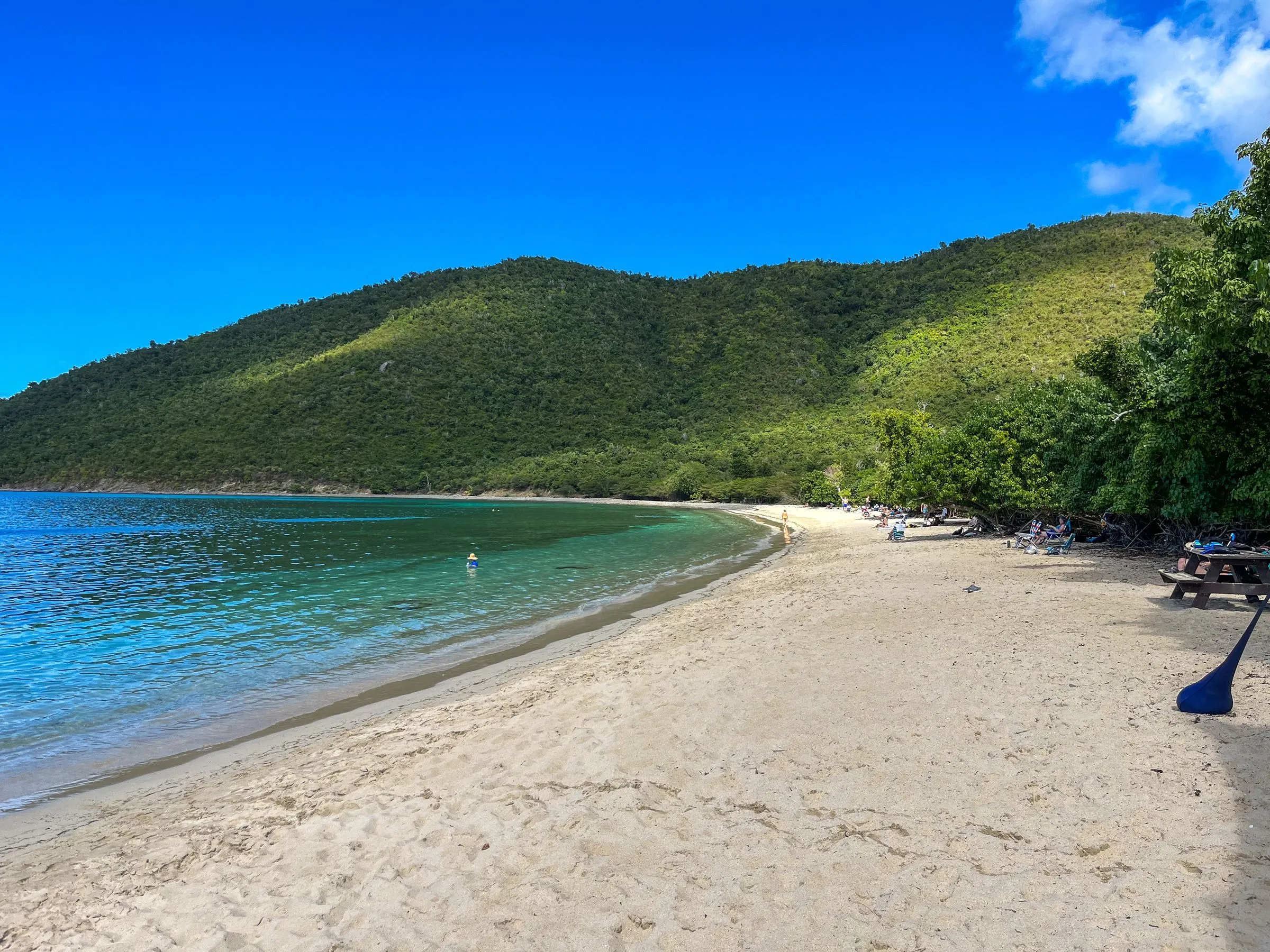 Francis Bay, St John. Photo: Matt Barnard on Pexels.
On the quieter east and south sides, Coral Bay and Salt Pond Bay feel far from anywhere, and the hike to Ram Head gives one of the best views in the Virgin Islands.
St Croix
The largest of the US Virgin Islands lies about 40 miles south of St Thomas, an open-water passage that suits longer charters and more experienced crews. Off its north-east coast, Buck Island Reef National Monument has a marked underwater trail through elkhorn coral and a beach that’s often almost empty. Christiansted and Frederiksted keep much of their Danish colonial architecture.
A sample week
A typical seven nights from St Thomas, combining both territories:
- Day 1: Board at Red Hook and sail the short distance to Christmas Cove for a swim and a quiet night.
- Day 2: Along St John’s north shore: snorkel Trunk Bay, then pick up a mooring in Maho Bay to swim with turtles.
- Day 3: Waterlemon Cay in the morning, the Annaberg ruins, then clear into the BVI and sail to Jost Van Dyke.
- Day 4: Sandy Spit and White Bay, then across to Norman Island for The Caves.
- Day 5: Cooper Island and the RMS Rhone, or Virgin Gorda for The Baths.
- Day 6: Clear back into the USVI and spend a slow day at Salt Pond Bay or Coral Bay on St John.
- Day 7: Honeymoon Beach on Water Island, then a final night with a view of Charlotte Amalie’s lights.
Routes are always adjusted around the weather, the guests and the national park rules; your captain will suggest what works best on the day.
When to go
As in the BVI, the main season runs from mid-December to April, with dry, breezy weather and the busiest anchorages. May and June often bring calmer seas and good availability. The Atlantic hurricane season runs from 1 June to 30 November, with the peak risk from August to October. Our month-by-month guide goes into more detail.
Good to know
- Currency: the US dollar.
- Entry: the USVI are a US territory, so US entry rules apply. Many UK travellers need an approved ESTA before flying; always check the latest official advice before you travel.
- Driving: on the left, as in the UK, if you hire a car ashore.
- National park moorings: use the park’s mooring balls where they’re provided. There’s a small overnight fee, and anchoring is restricted in many bays to protect the seagrass and coral.
- Crossing to the BVI: everyone aboard needs their passport. Your crew will clear customs in Cruz Bay or Red Hook and on arrival in the BVI.
Planning a USVI charter
From a crewed catamaran out of Red Hook to a motor yacht that can run to the BVI and back in a day, tell us what you have in mind and we’ll send you a shortlist of yachts that are available on your dates. You might also like our guide to the British Virgin Islands.
← Back to all destinations