If the British Virgin Islands had to be summed up in a single island, many sailors would choose Virgin Gorda. At its southern tip, granite boulders the size of houses tumble into turquoise water. At its northern end, a ring of islands and reefs encloses North Sound, one of the most sheltered and beautiful bays in the Caribbean. In between is a steep green spine of hills, much of it national park.
Most charters give Virgin Gorda two or three nights. That’s enough to see The Baths at their best, spend a lazy day in North Sound, and still have time to sail on to Anegada or back down the Sir Francis Drake Channel.
The Baths and Devil’s Bay
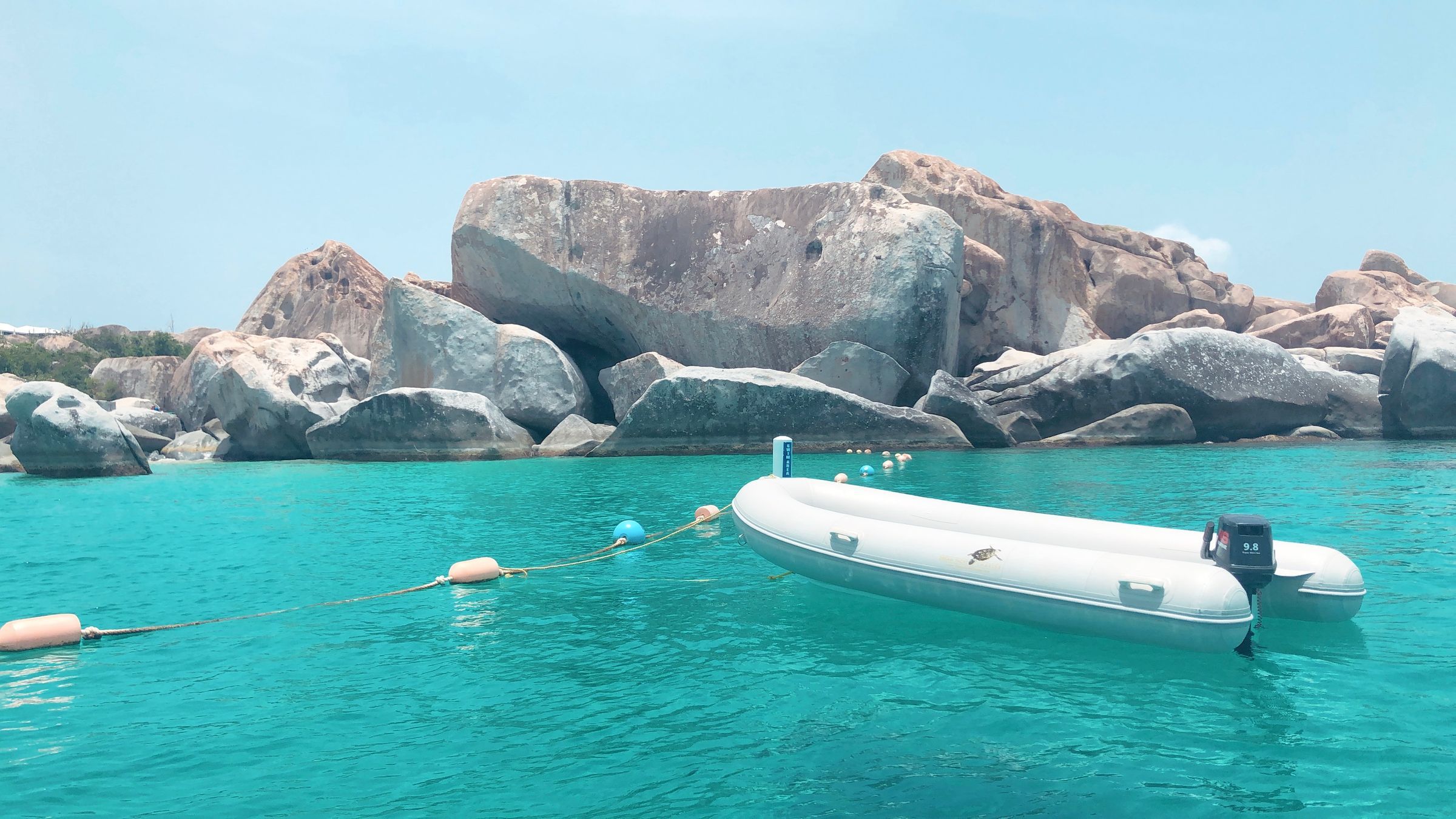
The Baths are the reason most people come. Millions of years ago, molten granite cooled underground; erosion has since left enormous rounded boulders stacked along the shore, forming pools, arches and tunnels that fill with filtered light. A marked trail leads from the beach through the boulders, wading and scrambling between grottoes, to Devil’s Bay, a small sandy cove that’s often quieter than the main beach.
A few things make all the difference:
- Go early. The National Parks Trust moorings fill quickly once the day boats arrive from Tortola and the cruise ships. Your crew will aim to pick one up soon after breakfast.
- Watch the swell. In the winter months, northerly swells can make landing difficult or unsafe. The park uses a flag system to show conditions; if it’s closed to swimmers, your captain will plan another day.
- Swim ashore. Dinghies tie up to a line off the beach, not on the sand, so expect to swim the last few metres. Bring a dry bag for anything you want to keep dry, and water shoes for the scramble.
Next door, Spring Bay and The Crawl have the same boulders with a fraction of the people, and lovely snorkelling along the rocks.
Spanish Town and the south coast
Virgin Gorda’s small main settlement, Spanish Town, has a marina at St Thomas Bay where yachts can top up with water and fuel, and a handful of shops for provisions. It’s also an official port of entry. On the hillside above the south-east coast are the ruins of a 19th-century copper mine, worked by Cornish miners, with a short walk and fine views towards Fallen Jerusalem and Round Rock.
Gorda Peak
For anyone who wants to stretch their legs, Gorda Peak National Park protects the island’s highest point, a little over 400 metres above the sea. A shaded trail climbs through forest to a lookout across North Sound to Anegada on a clear day. Your crew can arrange a taxi to the trailhead and collect you at the other end.
North Sound
Round the northern tip, North Sound is almost completely enclosed by Virgin Gorda, Prickly Pear Island, Saba Rock and a line of reefs. The water inside stays flat even when the trade winds are fresh outside, which makes it one of the best places in the islands for watersports: paddleboarding, kayaking, sailing dinghies, kitesurfing and waterskiing in calm, warm water.
Around the sound you’ll find:
- Saba Rock, a tiny island with a bar and restaurant that’s a classic place for sundowners.
- The Bitter End, the legendary yacht club at the eastern end of the sound, rebuilt after Hurricane Irma with a marina, moorings, restaurants and a watersports centre.
- Leverick Bay on the south side, with a marina, a beach and a relaxed restaurant.
- Prickly Pear Island, a national park with quiet beaches on its northern shore.
- Eustatia Sound, a shallow, reef-protected stretch beyond the sound that rewards a careful approach with excellent snorkelling. It’s usually a dinghy trip or for experienced skippers with good light.
The private islands of Necker and Mosquito lie just outside the sound. They’re closed to visitors, but you’ll sail past both.
Planning your days here
A typical Virgin Gorda stay on a crewed charter looks like this:
- Morning: an early start at The Baths and Devil’s Bay, then a late breakfast on board.
- Midday: sail up the west coast, perhaps stopping for lunch and a swim at Savannah Bay or Mountain Point.
- Afternoon: pick up a mooring in North Sound for watersports.
- Evening: sundowners at Saba Rock and dinner aboard or ashore.
- Next day: a lazy morning in the sound, a walk or a snorkel in Eustatia Sound, and, if the weather is settled, an early start for the sail to Anegada.
On a bareboat charter, check your charter base’s briefing: some ask you to visit The Baths only in good conditions, and most want you on a mooring or at anchor well before dark.
When to go
Virgin Gorda follows the rhythm of the rest of the BVI: the busiest and breeziest months run from mid-December to April, May and June are calmer and quieter, and the hurricane season runs from 1 June to 30 November. Winter northerly swells are the one thing to plan around for The Baths; your captain will watch the forecast and choose the best morning.
Getting here
Virgin Gorda is a half-day sail east from Tortola’s charter bases, and many crewed yachts include it in every itinerary. There’s also a small airport and a ferry service from Tortola if anyone needs to join or leave the charter mid-week.
Planning a charter with Virgin Gorda in it
Every charter we arrange in the BVI can include Virgin Gorda. If watersports matter to your party, tell us when you enquire: we’ll look for yachts with the toys you’d like and crews who know North Sound well. Our guide to the British Virgin Islands has a sample week, and Anegada is the natural next stop.
← Back to all destinations